Google DeepMind - Inception Team
Couple of different areas:
- he does incubation stuff - long term - Astra (Gemini Live), Genie, lots of internal projects (Orca), lots of entertainment (Worlds team built, etc.). Currently Inception for GDM. Building a breakthrough experiences for proof of concept. Big experiences that use available or early tech - plugged into research. Lots of release capabilities that aren’t being used before we shipped into the real uses.
- FOCUSED ON END USER EXPERIENCE.
- sit between research and Google products.
- traditionally incubation was against a search paradigm. was a holistic ecosystem. if you think there’s going to be an AI paradigm.
- astra is a perfect example - started in 2021. took time, no product surface, no out.
- 120-150 ppl
- research want research, his job to build experiences
- “first to proof of concept”
- want flexibility on time and size.
- incubation based to a product surface - same pathology.
- hack don’t fake. rough but real.
- some go to trusted testers, some go to brand wins (Genie),
- earn money by giving enough space to exploration.
- explore, then define, then push hard once it’s real to get a story then push hard to get it into products.
- whole space of things - gemini monster train - very powerful program of work - lots of people - has similar characteristics - feeding the beast.
- my background is interesting to him
- used to be split into research and applied with a bright line.
- made applied harvest algorithms from research and apply them to products. no deliverables on research.
- but disconnected R&D from products
- GDM 5500
- G Brain v. good at providing AI directly to product.
- so taking that carries with it the responsibiltiies
- don’t understand the space between research and product.
- applied isn’t is.
- we don’t know the end user.
- connecting dots between what the product wants and what the research is coming.
- more central company view
- his stuff early stage.
The Inception Team
Section titled “The Inception Team”- Inception will run like a startup, balancing high energy idea generation with pragmatic, clear and regularly refined operations.
- Collaborative, multidisciplinary group.
- Sizable and diverse portfolio of early stage, design focused projects, building on working processes developed internally on projects such as Astra, Genie, and Simpla.
- This role will have both Horizontal and Vertical aspects.
Predicting the Future
Section titled “Predicting the Future”1.Stop thinking you can predict the future → you can predict general trends, but have to jump in.
Arthur C. Clarke: Profiles of the Future:
It is impossible to predict the future, and all attempts to do so in any detail appear ludicrous within a very few years. This book has a more realistic yet at the same time more ambitious aim. It does not try to describe the future, but to define the boundaries within which possible futures must lie. If we regard the ages which stretch ahead of us as an unmapped and unexplored country, what I am attempting to do is to survey its frontiers and to get some idea of its extent. The detailed geography of the interior must remain unknown – until we reach it.*
- HAZARDS OF PROPHECY: THE FAILURE OF NERVE
- HAZARDS OF PROPHECY: THE FAILURE OF IMAGINATION
- Take a long term view → answers 5-10 years away. Think though implications.
- Make space for creative and weird souls → may need to move org once in execution mode.
- Dream like a child, test like a grownup → optimism works!
- Look for holy shit moment → they get you further than clear objectives.
- Cultivate the ability to be passionately dispassionate → never easy to kill projects, though.
- Create fearless teams of ‘chaos pilots’ → innovation comes from great teams.
“No prize for pessimism”
- Astra: a research prototype exploring breakthrough capabilities for Google products — on the way to building a universal AI assistant
- Genie: a foundation world model trained from Internet videos that can generate an endless variety of playable (action-controllable) worlds from synthetic images, photographs, and even sketches.
- Simpla: ?
My Successes and Failures
Section titled “My Successes and Failures”Decision gone my way?
- OpenAI - platform characteristics (economic and technical)
- Moving back and forth around the world - arguing over compensation packages is missing the big picture. The benefit of what you can learn, the richness of your experiences.
Decision not gone my way?
- Minecraft investment (failure of nerve)
- Our Core AI stack not launching research-developed because 1P aren’t asking for them / Xbox LIVE Arcade (incentives of others)
- AMD partnership (not a single player game)
Patterns?
- Failure of nerve - forgetting exponentials or assuming you’re in a single-player game
- Ignoring the structural incentives of others
- Make sure you’re clear about why you’re doing something: prestige or profit
- It’s good to not know too much! Design good experiments and trust the outcome
The most important thing you can do is install cultural support. All other things being equal, an innovative organization will always beat an organization with an innovation team.
The best way to have good ideas is to have lots of ideas - speak to people!
EXPERIMENTS!
An innovation pipeline requires a disciplined, evidence-based, data-driven process for connecting innovation activities into an accountable system that rapidly delivers solutions to hard problems.
- “No prize for pessimism”
- Be clear about whether you’re doing something for prestige or profit - helps you be honest about whether you’re looking for knowledge/capability or commercial evidence
- Drive the cost of experimentation to zero
- Make sure there’s high psychological safety - it’s about good experiments, not hitting home runs every time (if you are, you’re not being ambitious enough!)
- Remember it’s not a single-player, static game
- Don’t get hung up on small costs, and move quickly when you have a ‘holy shit’ moment
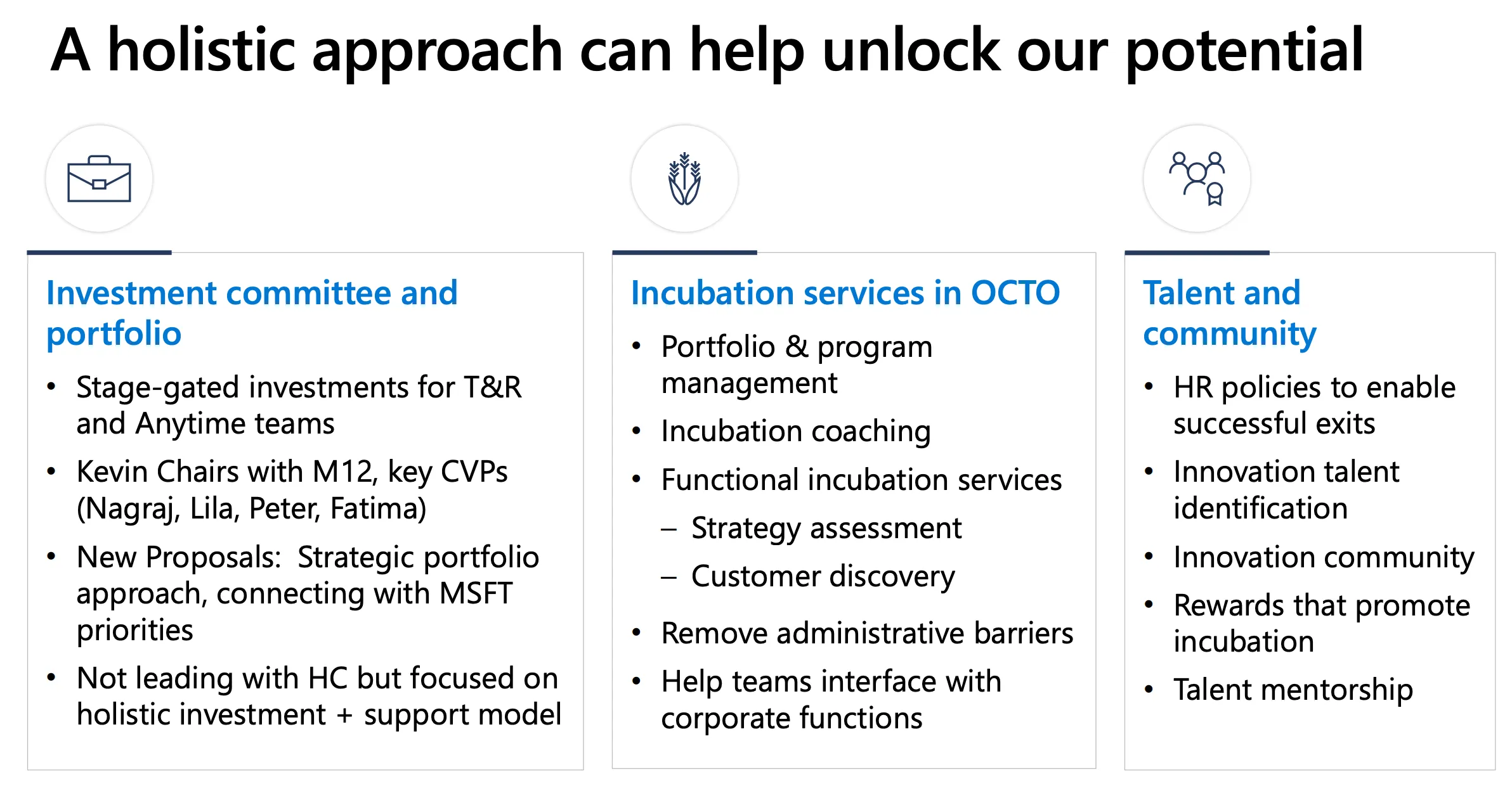
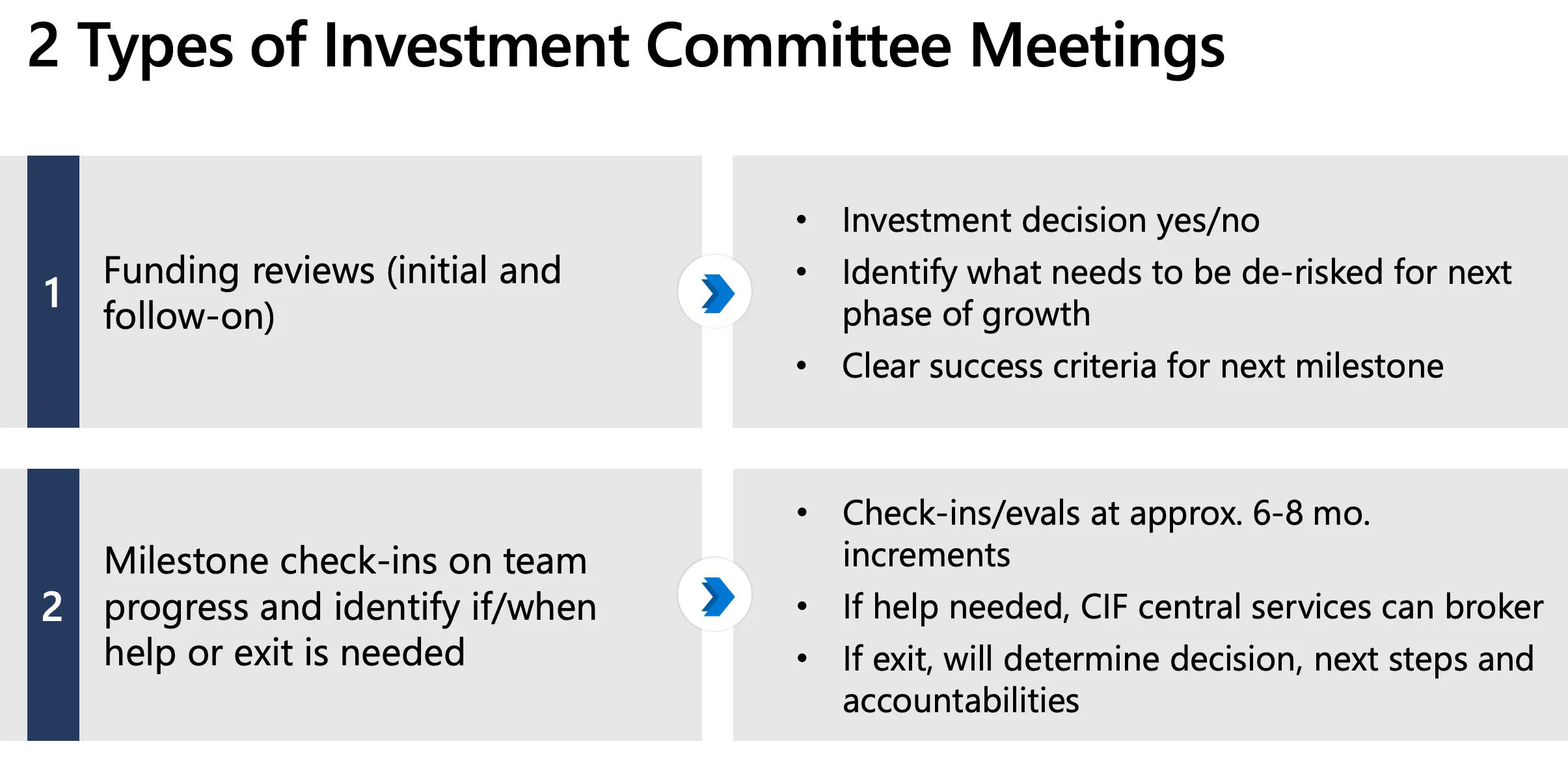
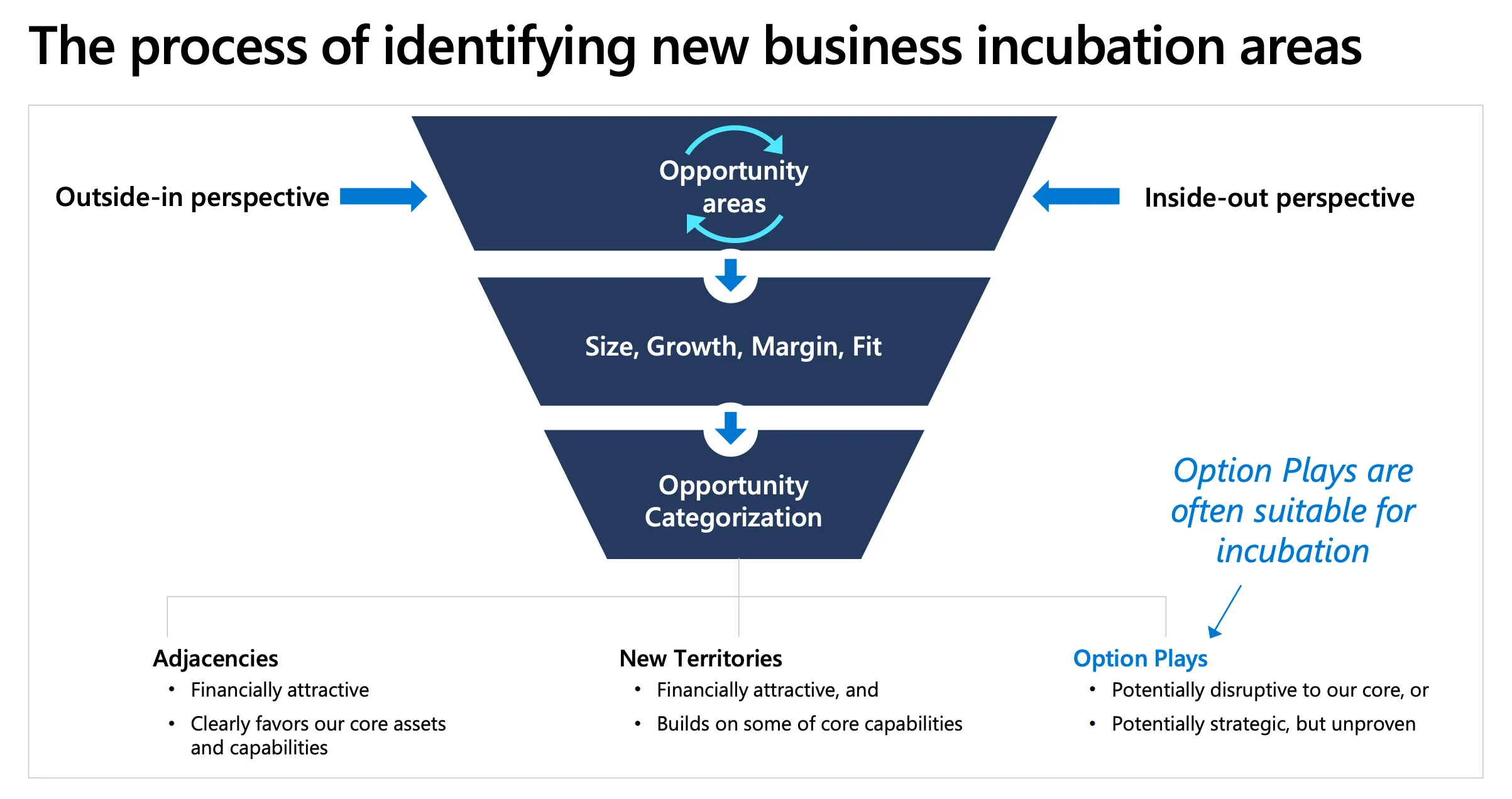
Central Incubation Proposal:
Great partnerships…
- Build trust – navigate future disagreements or issues
- Maintain alignment – defining and revisiting shared goals and desired outcomes often
- Show persistence – tackle complex problems together
- Have fearlessness – don’t be afraid to do hard things or take risks
Great Experiments
Section titled “Great Experiments”Ambidextrous leadership.
OCTO, however, operates in a somewhat unorthodox way when compared to that standard operating model. It’s true, of course, that we need to demonstrate excellence in our regular tasks. That’s table stakes. But our day jobs skew so much more heavily towards the “adapt and innovate” end of the spectrum that I’d like us to spend some time as a team thinking about learning and the growth mindset, the role of experimentation and intelligent failure, and context and consequences.
For some background it’s worth watching this short video from HBS’s Amy Edmondson, who also presented at the event: It doesn’t matter if you fail. It matters how you fail. | Amy Edmondson.
In short, a key area I’d like us to work on as a team is our ability to design, execute, and learn from experiments. Since there’s so much ambiguity in thinking about the future, a framework for good experimentation is a key tool for chipping away at that uncertainty and clarifying which areas of technology we should pursue.
And when I say ‘good experiments’, I mean a very specific thing. I mean designing a set of scoped, time-bound activities that:
- help us learn specific, valuable, new information;
- are worthwhile (taking into account the scale of MSFT’s business);
- are predicated on a reasonable set of expectations / a hypothesis about what might happen;
- are as small as possible to deliver enough the required information;
- provide a way to scale the learnings to all of our stakeholders; and, critically
- allow us to take advantage of our team’s unique superpower: namely, that we’re not bounded by the collective intelligence of MSFT! Being a partner team in MSFT’s Office of the CTO comes with a unique gift: we can take advantage of the intelligence, insight and hard work of, well, practically any company on the planet. We must take advantage of that!
Once we’ve designed good experiments, we then must execute well. Some of the key behaviors we know well, and I’m proud to see you folks exhibit them on a daily basis: trustworthiness, alignment, persistence, and fearlessness. But we also need to be good at error awareness: the ability to catch and correct errors as we experiment. And to be clear: designing good experiments and executing well does not guarantee you’ll get the outcome you want! It wouldn’t be an experiment if the result were pre-ordained: we need experiments to be able to fail, and if everything’s a success then, well, we certainly aren’t being ambitious enough. Intelligent failure provides valuable information.
That said, I recognize all that I’ve said requires an environment of high psychological safety, and that’s something both that we should strive for as a team, and that you should hold me accountable for.
I know I’ve spoken with some of your about this in our 1:1s. And one thing I want to be clear is that experiments can be - usually should be! - relatively small. I don’t want us to get writers’ block trying to polish some proposal for the next huge idea that will be the future of MSFT. To have good ideas you need to have lots of ideas, and being able to iterate quickly on an experiment idea is going to be a very useful skill for us to have.
To demonstrate, I’ve pasted below a couple of examples to show how, even for reasonably-sized experiments, the framing really doesn’t need to be that complicated. (Note: these are all ideas from 2018. And, in the spirit of Reid Hoffman’s “if you’re not embarrassed by the first version of your product, you’ve launched too late” 🙂 probably seem very simplistic given all that’s happened since then! But, I hope they’ll give you a flavor for the type of thing that can frame an experiment. Just to get started.)
Cloud AI Platform – GSI Partnership Program
Thesis:
Cloud AI products demonstrate significant pull-through of other services (e.g. compute/storage). During the early stages of enterprise AI adoption, GSIs disproportionately drive the enterprise adoption of cloud AI technology.
Modest partnership investments at this early stage allow us to shift GSI data & AI practices onto Azure, increase platform stickiness, and drive significant Azure revenue.
Targets: Accenture, Tata Consultancy Services, Cognizant, Wipro
Deal terms:
MSFT Gives: Exec sponsorship of partnerships, allocation of Azure credits, funding & resources for AI training, joint sales & marketing GTM activities.
MSFT Gets: GSIs shift their AI practices & technologies to the Azure Cloud AI platform, commit to developing MSFT priority solutions, commit to training staff on MSFT technologies, commit to pursuing MSFT’s T400 strategic accounts.
Enterprise Knowledge Graph – Early Adopter Program
Thesis:
We want to democratize & drive adoption of AI technologies. Enterprise Knowledge Graph aggregates a company’s disparate structured & unstructured data sources, and exposes that data through a natural language interface to help make information workers be more efficient.
We’re setting up an early adopter program to drive clarity on product definition, gauge market demand & sign lighthouse partners to showcase MSFT events.
Targets:
Nestle, Centrica, Kaiser Permanente, Publicis
Deal terms:
MSFT Gives: MSFT develops a data pipeline & ontology for a customer’s industry & use-case, then deploys an instance of EKG, natural language API, and Bot Framework interface to answer questions. Time-limited license for the customer to test in advance of GA.
MSFT Gets: Access to high-value industry scenarios & common use-cases, ability to build industry ontologies & data schemas, PR opportunities around digital transformation. Azure consumption + EAP fees (value to be confirmed).
Ambient Intelligence – Early Adopter Program
- Thesis:
- Ambient Intelligence is a platform to instrument & query physical spaces. Through the use of cameras & other sensors, Ambient Intelligence provides a way to ask questions about the presence, movement, activities & interactions between humans, physical spaces & objects.
- We’re setting up an early adopter program to drive clarity on product definition, gauge market demand & sign lighthouse partners to showcase MSFT events.
- Targets:
- Currently targeted at retail, but also investigating manufacturing & other industry use-cases: Kroger, Starbucks, Carrefour, Tesco, Schwarz Gruppe, Marks & Spencer
- Deal terms:
- MSFT Gives: 18-month engagement to define retail customer use-cases (pick & go shopping, shelf availability, shrinkage, etc.), and deploy & operate an ‘alpha’ version of the Ambient Intelligence solution in a single retail store.
- MSFT Gets: EAP fee per customer of between $1M & $4M depending on use-case & store complexity. Real-life testing in a physical retail store. Ability to use retailer data to build common ML Models. PR opportunities.
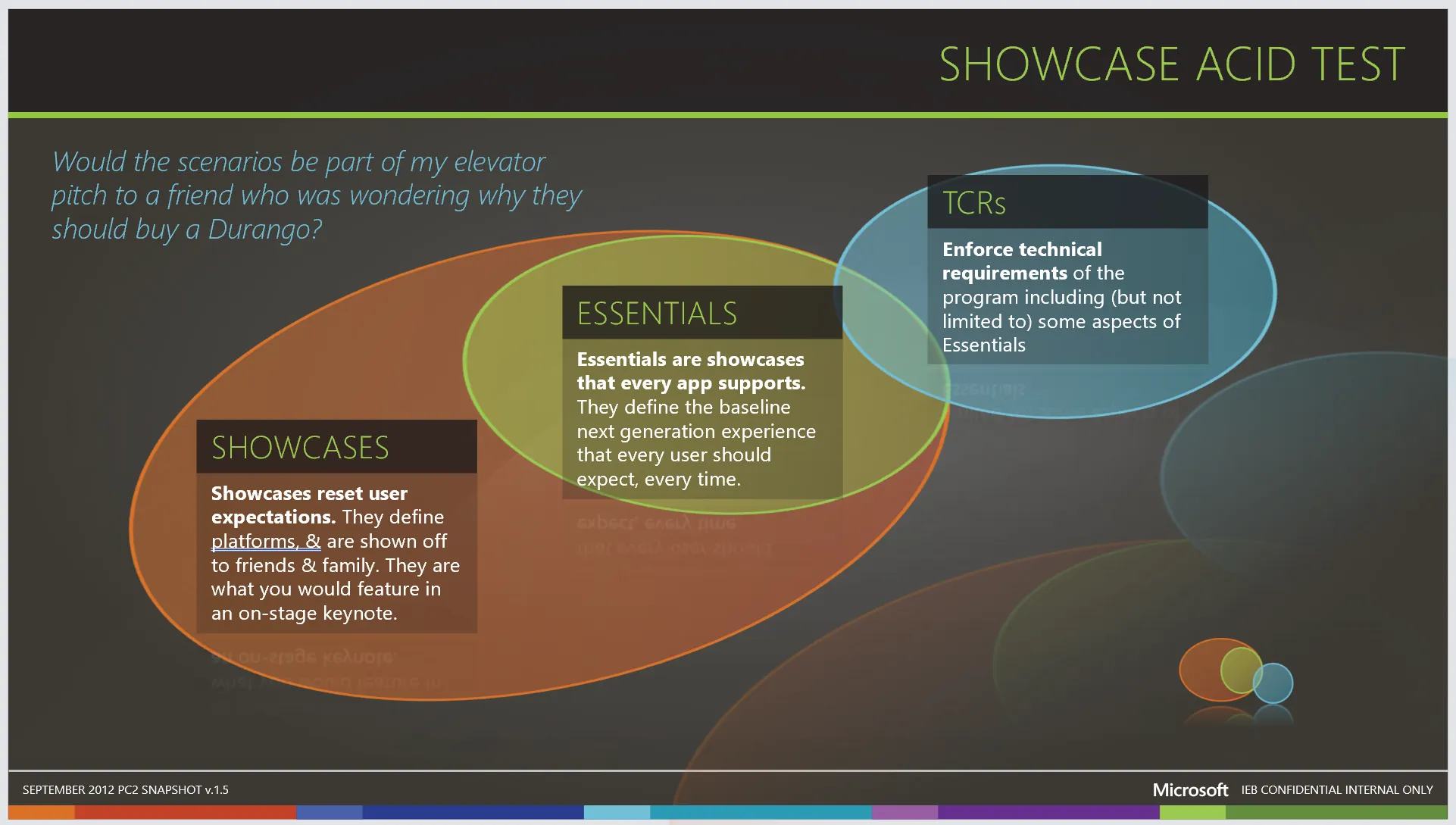
Simon Wardley’s “Pioneers, Settlers, and Town Planners”
Section titled “Simon Wardley’s “Pioneers, Settlers, and Town Planners””The concept of Pioneers, Settlers and Town Planners is a derivative of Robert X. Cringely’s description of companies as Commandos, Infantry and Police as expressed in the delightful 1993 book - Accidental Empires. The first time I used this structure was around 2005-2006.
Pioneers are brilliant people.
- They are able to explore never before discovered concepts, the uncharted land. They show you wonder but they fail a lot. Half the time the thing doesn’t work properly. You wouldn’t trust what they build. They create ‘crazy’ ideas. Their type of innovation is what we call core research. They make future success possible. Most of the time we look at them and go “what?”, “I don’t understand?” and “is that magic?”. In the past, we often burnt them at the stake. They built the first ever electric source (the Parthian Battery, 400AD) and the first ever digital computer (Z3, 1943).
Settlers are brilliant people.
- They can turn the half baked thing into something useful for a larger audience. They build trust. They build understanding. They make the possible future actually happen. They turn the prototype into a product, make it manufacturable, listen to customers and turn it profitable. Their innovation is what we tend to think of as applied research and differentiation. They built the first ever computer products (e.g. IBM 650 and onwards), the first generators (Hippolyte Pixii, Siemens Generators).
Town Planners are brilliant people.
- They are able to take something and industrialise it taking advantage of economies of scale. This requires immense skill. You trust what they build. They find ways to make things faster, better, smaller, more efficient, more economic and good enough. They build the services that pioneers build upon. Their type of innovation is industrial research. They take something that exists and turn it into a commodity or a utility (e.g. with Electricity, then Edison, Tesla and Westinghouse). They are the industrial giants we depend upon.
What you want is brilliant people in each of these roles.