thestartupmanifesto.com - THE Startup Manifesto

What actually works: no theater, no dogma. A handbook for anyone building, scaling, and working in startups from founding through the first 50 employees. Think of it as the Startuper’s Guide to the Galaxy: a collection of lessons, scars, and notes scribbled along the journey. And yes, it contains 42 practices; because sometimes the ultimate answer really is that simple.
Product & Mission
Section titled “Product & Mission”How you build stuff people actually want.
1) Everyone’s on Stage: Nail Your Pitch
Section titled “1) Everyone’s on Stage: Nail Your Pitch”Principle. Explain what you do or you don’t get it. No spectators. Repeat the why until it’s muscle memory.

In practice
How to run it.
Everyone knows the pitch cold. Practice demos until you sweat.
Everyone engages with customers through support, booths, calls, and demos. No exceptions.
All studies begin with market or customer context. Team members articulate your value and differentiators confidently without relying on slides.
Definition of done. Ask anyone here, “why are you building this?” You get the same crisp, confident answer.
Anti-patterns. “Ask sales.” “Not my job.” Slide karaoke. Decks you don’t understand. “Because the roadmap says so.” Leaders assuming “everyone knows.” Secret agendas.
Example: At our first InCyber show in Lille, we didn’t have a dedicated sales team yet, so we decided to staff our booth with engineers. They were initially hesitant about pitching the product. But after only a few minutes of repeating and imitating founders, they trusted themselves and crushed it. Better than most salespeople. They even loved the experience!
2) Roadmap is a Compass, not a Contract
Section titled “2) Roadmap is a Compass, not a Contract”Principle. Roadmaps are fiction. Promises are lies. Only real customer pain matters.

In practice
How to run it.
Obsess over market realities: study what people do, not what they say. Your competitors and analytics will tell you the truth.
Listen to customer pain, not their proposed solutions. They know what hurts; you know how to fix it better than your competitors.
Every roadmap item must solve a proven problem with evidence and use an incremental approach. No hypotheticals, no maybes, no feature creep.
Continuous reviews: celebrate wins, kill failures, pause great-enough features, and rotate squad members. Nothing is immune to reassessment.
Definition of done. Every feature is tied to a real problem with hard evidence and implemented in its simplest, most lovable form.
Anti-patterns. Feature factories. No “wouldn’t it be nice” fantasies. Checkbox-driven development. Roadmaps that look pretty but say nothing.
Example: When founding our startup, we studied competitors intensively, interviewed users, analyzed features, captured screenshots, and identified key gaps in solutions. We built a “most lovable product” roadmap focusing on just 20% of what competitors offered, specifically targeting critical pain points and emphasizing our key differentiators. Our first releases addressed customers’ actual core frustrations, quickly earning their trust. Less is more.
3) Steal Brilliantly, Innovate Strategically
Section titled “3) Steal Brilliantly, Innovate Strategically”Principle. Steal shamelessly what works well. Reinvent ruthlessly what’s broken. The genius lies in knowing which is which.
In practice
How to run it.
“Good artists copy, great artists steal.” Stop pretending you need to reinvent the wheel. Know when to follow standards and when to break them.
Study competitors methodically. Steal what works, make it better. But when their patterns fail, burn it all down. Don’t iterate on mediocrity; reimagine what’s possible.
Pour creativity into your core differentiators. Save your brilliance for what matters. Leverage existing solutions for everything else.
Adopt user experience patterns your users already know. Don’t force them to learn new interaction models just to showcase your creativity unless these new models are genuinely better.
Definition of done. Ruthlessly conventional where convention works. Boldly revolutionary where it matters.
Anti-patterns. Not-invented-here disease. Innovation theater with no substance. Reinventing the wheel just to stroke your ego.
4) Ideas Are Cheap. Execution Pays
Section titled “4) Ideas Are Cheap. Execution Pays”Principle. Everyone has ideas. Value comes from turning them into reality through persistence, iteration, and sweat.

In practice
How to run it.
Ship and iterate fast: write it, build it, get feedback. Failed experiments teach more than perfect plans.
Ideas without action are noise. Action turns them into value.
Borrow, remix, or combine, but always make it useful.
The gap between idea and reality is a graveyard. Cross it with prototypes and rapid feedback loops.
Let people experiment, but never at the expense of focus and delivery.
Definition of done. An idea is judged by what it becomes, not how it sounded.
Anti-patterns. Keeping ideas to yourself. Endless talk. Brainstorms without builds. Stopping after v1.
Example: Everyone discussed blue/green deployments as if they could be done in minutes, but the actual implementation took 8 months of hard work. We explored multiple complex approaches before finding the right path, and throughout the process, we continuously refined our initial ideas. Ideas flow easily; execution is what ultimately creates value. The payoff in the end? Our system resilience and stability improved dramatically.
5) Make AI an Unfair and Trusted Advantage
Section titled “5) Make AI an Unfair and Trusted Advantage”Principle. AI is a strategic differentiator, not just a productivity boost. Every team member must be an AI power user, pushing boundaries in their domain.

In practice
How to run it.
AI-native mindset: every workflow, process, and decision looks for AI leverage, but only where it genuinely adds value.
Hunt for unfair advantages: apply AI where it transforms outcomes and can’t be easily copied. Always re-examine where AI changes the game.
Ownership is yours: if AI helps, you’re still accountable for accuracy, ethics, and value.
Human judgment stays final: AI assists, humans decide; especially for customer, ethical, or strategic calls.
Definition of done. AI must deliver real, tangible value - or you kill it. Everyone uses AI workflows daily. If it doesn’t make you faster, better, or smarter than competitors, it’s worthless.
Anti-patterns. Tools without strategy. Sticking to old ways when AI offers better paths. Blindly swallowing hallucinations. Automating garbage instead of rethinking work.
Example: Our feature studies always include a competition section. AI with deep research mode drafts the initial analysis, saving us countless hours and either confirming or challenging our perspectives. The team then enhances this with notes, validation, and real-world testing. This combination proves faster and more insightful than either AI or humans working alone.
6) Differentiation or Death
Section titled “6) Differentiation or Death”Principle. If you’re not meaningfully different, you’re invisible. Differentiation isn’t a marketing trick; it’s survival.

In practice
How to run it.
Maintain differentiation documents that articulate your unique position in the market and why it matters to customers.
Test the “so what” factor: If prospects don’t say “that’s different,” it’s a red flag.
Invest disproportionately in your differentiators: they get the most resources, attention, and refinement. True differentiators must be incredibly difficult to replicate.
Defend your uniqueness ruthlessly. If you can’t explain your difference in one sentence, you don’t have one.
Know competitors obsessively, but never follow them. Monitor their every move. Your differentiator survives only when it’s uniquely yours. Guard your secret sauce fiercely in the early days.
Definition of done. Prospects and investors can immediately identify how you’re different and why it matters to them.
Anti-patterns. Feature parity obsession. Generic marketing. “We’re like X but better.” Chasing competitors instead of customers. Being everything to everyone.
Example: Integration of thousands of vendors in our orchestration platform was our founding premise. We invested very significant R&D in what competitors avoided as “too hard” or dismissed with “this is the way.” This wasn’t a minor detail; it was existential differentiation. Today, customers consistently cite our integration library as their primary reason for choosing us, creating a competitive moat that grows with each new connection.
People & Culture
Section titled “People & Culture”How you build teams that actually give a damn.
7) Tear down the Walls: Everyone is a Builder
Section titled “7) Tear down the Walls: Everyone is a Builder”Principle. Titles don’t build companies or products. People do. “Not my job” is banned. Silos kill innovation.
In practice
How to run it.
Everyone is a designer. Care for design is care for the product. If it looks sloppy, it is sloppy.
Everyone is an engineer. Spot problems, propose fixes, automate the boring stuff even if it’s not “your job.”
Everyone is in support. Customer pain is everyone’s problem until it’s solved.
Everyone sells. If you can’t explain your value, you’re not building it right.
Everyone is a founder. Ownership means you don’t walk past broken windows. You fix them.
Definition of done. People fix stuff without permission. Every detail polished. Help is a reflex, not a favor.
Anti-patterns. “That’s not my job.” Ivory towers. Territory wars. Permission-seeking paralysis.
Example: During 4 years, our security officer progressively took on compliance certifications, then IT duties, followed by grant management, legal aspects of customer contracts, and eventually cybersecurity presales. We couldn’t believe one person could transition between all these areas effectively, but this colleague did. This demonstrates true builder mentality - a rare quality, but one that does exist in exceptional talent!
8) Be Curious, not Judgmental
Section titled “8) Be Curious, not Judgmental”Principle. Curiosity drives excellence. You ask, explore, learn, and improve without cynicism, ego, or perfectionism.

In practice
How to run it.
Hunt for feedback like your life depends on it. Get it from customers, team, competitors - then blast it everywhere.
Questions beat judgments every time. Don’t criticize - contribute.
Nothing’s permanent. Treat decisions like bets, not commandments. Change course when reality demands it.
Master your tools, automate the grunt work, and focus your energy where it matters. Excuses are for losers.
Definition of done. Seek feedback, ask tough questions, contribute unprompted. Challenge regularly, improve measurably.
Anti-patterns. Perfectionism paralysis. Religious tech wars. “Let’s not touch it.” Zombie ideas. Rebuilding what already works just because.
Example: After discussing with a customer, we discovered they solved LLM connections with a framework we had overlooked. Ironically, a teammate had flagged this same framework months earlier, but no one paid attention. This framework would have given us clarity on our “Bring your own LLM” strategy much earlier and saved numerous strategic discussions. A humbling reminder of why curiosity matters.
9) Hire for Hunger, Humility, and Team Spirit
Section titled “9) Hire for Hunger, Humility, and Team Spirit”Principle. Grit beats pedigree. Curiosity beats credentials. Stay hungry, stay humble, stay excellent.

In practice
How to run it.
CVs open doors; proof of work and references close them.
Hire learners over knowers. Someone who can figure it out beats someone who already knows it.
Zero tolerance for toxicity: psychological safety is non-negotiable.
Seek builders who lift others, chase outcomes, adapt fast, and pursue excellence.
Hire people much better than you. Otherwise, you’re the ceiling.
Definition of done. You hire people whose work shows hunger, not just diplomas.
Anti-patterns. Degree worship. Whiteboard trivia. Tolerating brilliant jerks. Comfort-zone dwellers.
Example: Our first engineer showed up to the interview with a working prototype already built, just from reading our job post. We’ve passed on candidates from elite schools who demonstrated less motivation and practical implication in the role. The engineer is now key to our org. Paper credentials don’t build great products. Hunger does.
10) Recruit with Rigor, not Hype
Section titled “10) Recruit with Rigor, not Hype”Principle. Passion without process is chaos. Enthusiasm alone can’t build a company; discipline in hiring does.

In practice
How to run it.
A clear pipeline with rigorous tracking: sourcing → intro → team lead → case → at-home task → cultural fit → reference checks → team sit-in. Every step is documented and evaluated.
Real work cases and tests. Puzzles are for children.
Hire 10, interview 100. Volume matters.
Diversity isn’t politics - it’s business sense. Different backgrounds = better solutions.
Definition of done. A hire thrives in your work, with your people, in your environment.
Anti-patterns. Puzzle hoops. Single-interview or desperation hires. “No questions” candidates. Comfort-zone dwellers.
Example: One candidate appeared unsuccessful due to an unfinished at-home task. However, we discovered this person had taken significant risks, learned our stack on the fly, and consistently demonstrated humility, curiosity, and a drive for excellence. The combination of our methodical, comprehensive interviews convinced us to make the hire. Today, this individual is a team leader who embodies the hunger, humility, and team spirit we value.
11) Mix Seniors with Sprinters
Section titled “11) Mix Seniors with Sprinters”Principle. Wisdom without energy stalls. Energy without wisdom crashes. Balance both.

In practice
How to run it.
Seniors uphold standards, mentor, and guide.
Juniors bring fresh energy, adaptability, and new eyes.
When new teams form, hire senior experts / leaders first - unless you’re already one. You need guidance, not just execution.
Interns and apprentices ship real features, paired with seniors who steer them through complexity.
Cross-learning benefits everyone: seniors teach, juniors innovate. Create tomorrow’s leaders through deliberate mentorship, not last-minute scrambling.
Definition of done. Throughput and quality rise together.
Anti-patterns. All-junior (stall). All-senior (analysis loops).
Example: During the first project, an apprentice shipped a complex feature (Changelog) integrating both React frontend and AWS backend systems. With senior guidance through product reviews, architecture discussions, and pair programming sessions, the feature reached customers successfully. Customers didn’t care who built it. We did.
12) Build T-shaped Teams
Section titled “12) Build T-shaped Teams”Principle. Depth makes you an expert. Breadth makes you resilient. Teams need both.

In practice
How to run it.
Hiring scorecards check for adjacent skills, not just core expertise.
Frequent “stretch tickets” push people one step outside their specialty. Comfort kills growth.
Celebrate cross-skill saves when someone jumps in beyond their role.
Encourage interdisciplinary knowledge sharing with regular lightning talks and cross-team shadowing opportunities.
Create an environment where people can get help outside their expertise zone without fear of ridicule.
Definition of done. Work never stalls on roles. Teams swarm problems together.
Anti-patterns. “Not my job.” Expertise as gatekeeping instead of team lift.
Example: Our Head of Product excels in product management and marketing while also being an outstanding web designer and typography specialist.
13) Hire Adults. Trust Them. Guide with Structure
Section titled “13) Hire Adults. Trust Them. Guide with Structure”Principle. No clarity = chaos. No trust = paralysis. Autonomy needs both.

In practice
How to run it.
Leaders eliminate obstacles, not control. Be present for quality checks, then trust your team to execute and get out of the way.
Kill blame, keep learning. Retros focus on fixes, not finger-pointing.
1:1s are for growth, not small talk. Regular reviews create crystal-clear expectations.
Team retros aren’t optional. They prevent drift and fuel improvement.
Be transparent about time, money, and status. Hidden constraints create false expectations.
Definition of done. People move fast without waiting and stay aligned on goals.
Anti-patterns. Micromanagers: constant check-ins, and acting as the sole decision-maker. Absentee leaders: no reviews, no context, no feedback.
Example: During our second year, with a small team, a co-founder deeply involved in development went offline for three weeks. The team continued shipping, reviewing, and reporting without interruption. Decisions flowed smoothly and quality remained high. This perfect blend of trust and clear structure kept momentum unbroken.
14) Lead from the Trenches, not the Ivory Tower
Section titled “14) Lead from the Trenches, not the Ivory Tower”Principle. Authority is earned through credibility, not titles. Real leaders guide and contribute. Founder mode.

In practice
How to run it.
If you can’t evaluate the work, you can’t lead it effectively. Stay connected through product reviews, architectural discussions, design sessions, and customer calls.
Balance strategy with autonomy: set direction, knowing when to step in (critical decisions) and when to step back (execution).
Be involved in quality without bottlenecking execution. Embody “founder mode”: stay hands-on with details while avoiding micromanagement. Don’t just delegate blindly like managers.
Set clear expectations but allow flexibility: help people balance work and life without drama.
Micromanagement occurs when you add anxiety, not value, to decisions.
Definition of done. Teams respect leaders who know the craft, give clear direction, and balance oversight with trust.
Anti-patterns. “Because I said so.” Detached figureheads. Over-controlling dictators. “Manager mode”.
Example: When founding the company, our CTO established infrastructure and architecture while simultaneously interviewing candidates and pitching to investors. With just one developer on the team, he delegated frontend work and guided through code reviews rather than trying to control everything outside his expertise. Four years later, he still actively contributes and reviews detailed product and engineering studies. This balanced leadership approach has sustained our growth for years.
15) Kill Single Points of Failure (founders included)
Section titled “15) Kill Single Points of Failure (founders included)”Principle. If one person holds it, you’re fragile. Resilience means no hero dependencies.

In practice
How to run it.
At least two trained owners for every critical system.
Runbooks exist, work, and get tested regularly. Words aren’t enough.
Founders and leaders must delegate and document. Knowledge hoarding is sabotage.
Pair programming and mobbing are encouraged. Leaders demonstrate these practices’ value by participating themselves, not just mandating their use.
Structure and document like your company depends on it; because it does.
Definition of done. Two people can run any mission-critical system, without delay or loss of quality.
Anti-patterns. Hero culture. Secrets locked in one brain. Founder bottlenecks that paralyze the org.
Example: A lone engineer spent weeks on a performance fix, claiming, “I have a special schedule that doesn’t allow me to work with others right now.” Without backup or collaboration, the work was eventually abandoned and had to be restarted from scratch. This wasted engineering hours and damaged team morale; a classic single point of failure with tangible business impact.
16) Hire Slowly, Fire Early and Kindly
Section titled “16) Hire Slowly, Fire Early and Kindly”Principle. Fast hires create toxic debt. Bad fits poison teams. When you know, you know. Don’t wait. Don’t hope. Act swiftly and humanely.

In practice
How to run it.
Take your time staffing a team. Building an effective team requires patience and careful selection.
Hire gradually, allowing new members to integrate and participate in future hiring decisions. No panic hires.
Be brutally honest from day one. Clear job descriptions, clearer expectations.
It’s about fit, not fault. Wrong seat, wrong bus - simple as that. Stop hoping, start deciding. Bad fits exit quickly and humanely.
People don’t fundamentally change. Every delay is cruelty to everyone - especially them. When your gut says “problem,” your brain already knows.
Definition of done. Bad fits get out. Standards remain intact without harshness. Everyone understands your principles cannot be compromised.
Anti-patterns. Rushed hiring. Endless “second chances.” Hoping misalignment fixes itself. Lowering standards “just this once.”
17) Make Goodbyes Boring
Section titled “17) Make Goodbyes Boring”Principle. Departures should be calm, clear, and dignified; never dramatic.

In practice
How to run it.
People leave. Let them announce it themselves if they wish.
After someone leaves, leaders provide a brief factual summary to prevent speculation and explain the situation.
Tell it straight or don’t tell it at all. Zero tolerance for gossip or negativity. No speculation; professionalism only.
Offboarding is mechanical and fast: access cut, knowledge transferred, accounts closed.
Goodbyes are also data: analyze why people leave.
Definition of done. No drama. Clean handoffs. Zero gossip. Next.
Anti-patterns. Radio silence breeds toxic gossip. Spin or narratives that distort the truth.
Example: A product engineer left to pursue another passion. Leaders respected the decision despite attempts to retain this person. The team celebrated the engineer’s contributions while leadership ensured a smooth handoff to maintain continuity and prevent staff from worrying. The Slack goodbye in our general channel was appreciative, respectful, and boring in the best way.
18) Respect Moonlighting Boundaries
Section titled “18) Respect Moonlighting Boundaries”Principle. Personal projects fuel growth. They’re great as long as they don’t conflict with your mission, time, or energy.

In practice
How to run it.
Disclose and discuss any side work with leaders before you start them. No surprises.
Zero overlap with your industry, customers, or competitors. No moonlighting in your space.
During work hours, work on the company stuff. Not yours. Plan ahead.
Keep it reasonable. It must not drain focus, energy, or work hours. If it hurts, it’s gone.
Approvals are revisited if projects expand beyond the original scope. No backdoor expansions.
Definition of done. Side projects thrive. Main work never suffers.
Anti-patterns. Secret freelancing. Competing gigs. Projects that bleed your best energy.
Example: OK → a friend’s website, open-source contributions, or occasional training outside our industry. Not OK → consulting for competitors, side gigs with our customers, or commitments that eat into work hours.
19) Honor time Commitments
Section titled “19) Honor time Commitments”Principle. Time is trust. Show up when you say you will, and signal clearly when you can’t.

In practice
How to run it.
Core hours are non-negotiable. Show up for check-ins and reviews. Miss only for genuine time off or emergencies. Can’t attend? Provide an offline update.
Your calendar is your word. Keep it current. Set status in all tools before vanishing.
Long vacations need one month notice. Short breaks need clear communication. Just don’t surprise people.
Off means off. Family first, always. Just tell us clearly and go dark.
Company-wide shutdowns (like summer or end-of-year) may use vacation days. Critical roles stay on; everyone else disappears completely.
Definition of done. No surprises. Everyone knows who’s around, when, and why.
Anti-patterns. Ghosting. “Sorry I’m late” syndrome. Cancellations without adequate notice. Empty calendars. Disappearing mid-day with no signal. Sudden vacation requests.
Example: During an intensive hiring process, the CTO missed the first interview completely, then showed up extremely late to the rescheduled meeting with the same candidate. The interview was catastrophic, with the embarrassment painfully evident. Respect is non-negotiable. This behavior destroys trust and wastes everyone’s time. Never again.
20) Mental Space Fuels Innovation
Section titled “20) Mental Space Fuels Innovation”Principle. Constant sprinting kills creativity. Breaks and slack time fuel innovation and sustainable performance.

In practice
How to run it.
Protect your lunch, breaks, and slack time as productivity investments, not luxuries.
Track outcomes, not hours or meeting attendance. Value delivered is what counts.
Stack meetings at day edges as much as possible. The middle is sacred time.
Sports, team lunch, afterwork, walking meetings to build connection.
Definition of done. You show up present, deliver consistently, and innovate without burnout.
Anti-patterns. Hero worship of 80-hour weeks. Lunch-at-desk everyday.
Example: Some of our most transformative product features (ex: data picker and previews) weren’t on any roadmap. They emerged when engineers had time to step back from the daily grind. What looked like “less time working” actually produced some of our most significant gains. The takeaway: find the right balance between structured work and creative space.
21) Own Your Title, Own Your Scope
Section titled “21) Own Your Title, Own Your Scope”Principle. Titles aren’t vanity. They’re contracts of clarity, scope, and trust.

In practice
How to run it.
Document role responsibilities clearly from day one (starting with the job post). Clarity prevents chaos.
Maintain strict title consistency across all platforms (email signatures, LinkedIn, internal chat). Ensure titles clearly differentiate between individual contributors and team leaders (ex: Head of vs Engineer).
No inflated “Manager” titles. Leaders lead. People manage themselves. “Lead” means expertise and guidance, not power.
Earn title changes through impact, not ego or time-served.
Know your scope: clear limits and escalation paths, while encouraging transparent initiatives beyond boundaries.
Definition of done. Anyone (inside or outside) knows who’s accountable for what, without asking twice.
Anti-patterns. Inflated titles. Inconsistent self-representation. Confusion about scope.
Example: For individual contributors, we use practical titles that reflect actual responsibilities rather than power. You won’t find ceremonial roles like “Scrum Masters” or “Product Owners” here. Instead, we have “Team Leaders” who support, “Software Engineers” who build, and “Product Engineers” who shape. Our titles reflect real responsibilities, not ceremonial labels borrowed from methodology playbooks.
22) Write Your Own Handbook
Section titled “22) Write Your Own Handbook”Principle. Document your operating principles in a handbook from day one. This serves as your cultural compass for both new hires and existing team members.

In practice
How to run it.
When facing a critical question or issue, document the solution immediately as a guideline and add it to your handbook.
Your handbook should serve as a context-setting tool that establishes your cultural foundation for effective collective work.
Make your handbook public as early as possible. Secrets rot.
Cite sources for legitimacy. Review collectively to ensure accuracy and team buy-in.
Definition of done. The handbook principles are naturally integrated into daily operations and decision-making without requiring constant reference.
Anti-patterns. “You’ll document culture later.” Dusty handbooks nobody reads. Paying the same learning tax twice.
Example: This manifesto evolved directly from our internal handbook, which we’ve been building methodically over the past 4 years as we grew and learned.
Recognition & Feedback
Section titled “Recognition & Feedback”How you cultivate excellence and help people grow to their highest potential.
23) Feedback Fuels Trust: Praise and Critique Done Right
Section titled “23) Feedback Fuels Trust: Praise and Critique Done Right”Principle. Recognition and critique are two sides of the same coin. Done well, both fuel growth, trust, and clarity. Done badly, they poison the culture.

In practice
How to run it.
Thank specifically. Let creators show their own work as the first recognition.
Give feedback fast with Situation → Behavior → Impact → Next step. Adapt your tone if someone is stressed or facing personal challenges.
Skip nitpicks for minor errors or first-time slips with little value in pointing out.
Focus feedback on the work and business purpose, not the person. Apologize when you make mistakes.
Balance recognition across the team to avoid “loudest-voice” bias.
Definition of done. People know exactly what’s valued, what to improve, and feel respected, not managed. Trust deepens, performance rises.
Anti-patterns. Generic “great job.” Forced applause. Public shaming. Saving feedback for annual reviews. Criticism when someone’s vulnerable. Pointless nitpicks.
Example: During a major outage, we gave specific praise: “Thanks for working past dinner and creating an incident report that impressed the customer.” Instead of blame, we focused on prevention, which eventually led to our zero-downtime architecture.
24) 1:1s Are Sacred
Section titled “24) 1:1s Are Sacred”Principle. 1:1s aren’t optional. Skip them at your peril. Nothing else builds trust or surfaces blind spots so effectively.

In practice
How to run it.
15-minute 1:1s every 3 weeks for all employees. Alternate between your direct team leader and another leader for perspective. This cadence is demanding but invaluable.
Growth, not tasks. Focus on feedback, blockers, development, relationships. Keep them sacred: about the person. Never hijack for project talk.
Ask tough questions. Listen hard. Safety comes from honesty, not comfort.
Make room sacred. Find quiet space, and never multitask. Remote or in-person, give full attention. A distracted 1:1 is worse than none.
Write down every action. Always follow through.
Definition of done. Both walk away with greater clarity, mutual understanding, and next steps if any. Leaders actually do what they promised.
Anti-patterns. Serial cancelers. Status update hijackers. Issue ghosts. Empty feedback that leads nowhere.
Example: Through a series of consistent 1:1s over several weeks, leaders discovered issues with a new hire that weren’t apparent in team meetings. Despite repeated adjustment attempts across several 1:1 sessions, both sides ultimately recognized it wasn’t a good fit. The structured 1:1 cadence allowed these challenging conversations to happen respectfully, preventing an extended mismatch.
In practice
How to run it
Match the market and publish clear salary bands (ex: +/-5%). No black boxes, no secret deals.
Review growth twice a year: impact, learning, progression. Promotions follow reality, not politics.
Be transparent on cash. If raises freeze, explain why. Honesty beats silence.
Don’t play negotiation games. Reward performance and team impact, not haggling skills.
Definition of done. Everyone knows where they stand, what’s next, and how to grow. No surprises, no resentment.
Anti-patterns. Salary secrecy. Raises by threat. Empty equity. Brilliant-jerk bonuses.
26) Ideas Belong to the Company. Credit Belongs to Teams
Section titled “26) Ideas Belong to the Company. Credit Belongs to Teams”Principle. Kill the lone genius myth. You build together, you win together. There are no superstar soloists.

In practice
How to run it.
The company owns everything you make here. Period.
Credit doesn’t belong to one rock star; it’s a team sport. Execution, ideas, and critique all deserve recognition.
Every contribution matters: from a sketch on a napkin to a brilliant question that changed direction.
No hierarchies on listings (ex: patents, meetings, presentation). List names alphabetically or randomly, not by who’s supposedly more important.
Balance group wins with personal growth. Everyone gets better, no one gets a pedestal.
Definition of done. No private victory laps. You win as a team, period. Individuals still get seen.
Anti-patterns. “That was my idea.” Credit-grabbing. Counting who did what. Building empires inside products. The silent bitterness of ignored contributors.
Example: So many people from the team had impact on our first customer deal that we can’t remember who exactly closed it. The win belongs to the whole founding team. Yet we make sure to highlight specific strengths that helped close the deal during personal growth conversations.
27) Progression: Always Growing, Never Plateauing
Section titled “27) Progression: Always Growing, Never Plateauing”Principle. Performance isn’t about checkboxes on annual reviews. It’s about visible, continuous progress. You’re either adding more value today than yesterday, or you’re actively making someone else’s job harder.

In practice
How to run it.
Scrap annual performance reviews. Hold progression talks twice a year. Document wins, growth, and ambitions. Informed by actual 1:1s, not HR checkboxes.
Team leaders judge what matters: Did you ship? Did you solve problems? Did you make the team better? Did you level up?
Fix issues now, or immediately after 1:1s, not during review season when it’s too late.
Do acknowledge growth. People join startups to learn faster, become better, and get richer - own it.
Reward visible progress with real money. When someone stagnates, address it immediately.
Definition of done. Everyone knows exactly where they stand. Growth is visible. Stagnation is addressed, not hidden.
Anti-patterns. HR-driven performance theater. Surprise feedback. Complicated rating systems nobody understands. Hidden performance issues.
Example: Our progression review forms include these sections: What notable things did you accomplish in the past 6 months? What new skills or knowledge have you gained? What are your natural strengths? What can you improve in the short-term? What are your long-term career interests? Both leaders and team members complete these sections. Multiple leaders review the semi-annual progress and rate it from “limited” to “exceptional.” This assessment influences compensation, though it’s not the only criterion considered.
Communication & Collaboration
Section titled “Communication & Collaboration”How you work together, remotely and in person.
28) Write before Speaking and Meeting
Section titled “28) Write before Speaking and Meeting”Principle. If it deserves thinking, it deserves writing. Writing sharpens thought, enables collaboration, and kills meeting fatigue.

In practice
How to run it.
Write first. Docs for depth. Chat for quick hits. Clarify your thinking before face-to-face. Early drafts catch stupid mistakes.
Meet when decisions, human connection, or complex judgment is needed. Every meeting needs: clear purpose, pre-reading, 2-6 people.
Unwritten work is imaginary work. Skip the hallway promises: support requests, tickets, diagrams, or docs.
Cameras on. Notes captured. Actions assigned. Or don’t bother meeting.
Definition of done. If it’s not written down, it didn’t happen. Async for 90% of work. Meetings only when typing fails.
Example: Our Excalidraw diagrams and Notion documents form a rich library of hundreds of resources that support both newcomers and ongoing work. This abundance isn’t clutter. It’s evidence of our disciplined approach to thinking through problems.
In practice
Definition of done. New hires find answers without asking. Information flows without gatekeepers.
Anti-patterns. DM culture. Secret decisions. Knowledge that vanishes when someone quits.
30) Daily Talk, Weekly Write, Monthly Truth
Section titled “30) Daily Talk, Weekly Write, Monthly Truth”Principle. Boring updates prevent exciting emergencies.

In practice
How to run it.
Daily 10-minute online check-ins: what’s done, what’s next, what’s blocked, team board visible, attendance expected, cameras on.
Document meetings with written summaries or board tracking to ensure critical information reaches everyone.
Brief cross-team Friday online check-ins (10-20 minutes) between teams to catch misalignments early.
Investor update: runway, MRR/ARR, net burn, cash in bank, top 3 wins/losses, hiring, product news.
Definition of done. Nobody (team, squads, or investors) ever says “I didn’t know that was happening.” Board gets clean, timely packs with zero surprises.
Anti-patterns. “We’ll update when it’s interesting.” Verbal-only updates. Shifting meeting schedules. Teams working in isolation until collision.
31) Reply Fast, Thread Hard, Kill the Noise
Section titled “31) Reply Fast, Thread Hard, Kill the Noise”Principle. Silence kills trust. Chaos kills context. Noise buries meaning. Reply promptly, keep it threaded, and avoid unnecessary chatter.
In practice
How to run it.
Clear chat debt daily. Protect your focus and personal time by tuning notifications like a surgeon.
Right tool, right job: chat for quick hits, tickets and docs for real work. Email is dead, except for customers.
No ghosting. Respond quickly, even just with an emoji, brief note, or timeline (“I’ll get back to you by Thursday”).
Thread everything to keep context and cut clutter. Separate channels by scope, squads, guilds, teams, and notifications. Top-level messages are sins.
Long conversations deserve better homes: tickets, docs, or brief meetings with written outcomes.
Definition of done. Every message gets a reply. Threads trap context. No one wastes time hunting for information.
Anti-patterns. Ghosting. Scattered conversations. Thread chaos. Notification graveyards. Email black holes.
Example: We maintain a dedicated channel for gathering feedback on new features before they reach our trunk codebase. Team members contribute their insights in organized threads. Once we’ve collected sufficient feedback, we close the thread and create a polish ticket that captures the essential points. We then review and implement these improvements with strategic prioritization before pushing to production.
32) Virtual Hallway, Real Office
Section titled “32) Virtual Hallway, Real Office”Principle. Remote by default, in-person with purpose. Flexibility + face time = speed, trust, and connection.

In practice
How to run it.
Everyone is online in a virtual hallway for spontaneous collaboration; local teammates meet in offices 1–3 days a week.
Balance flexible hours with regular in-office presence for local employees. This isn’t remote work; it’s hybrid.
Frequent in-person workshops with clear deliverables: agendas, artifacts, and the right attendees.
Design for collisions, not isolation. Digital spaces need energy too.
Office rules: Respect focus. Use headphones. Take calls elsewhere.
Definition of done. Remote works, in-person accelerates. Teams meet face-to-face regularly because pixels can’t replace presence.
Example: Collaboration flourishes in both Gather Town (our virtual hallway) and our physical offices. Spontaneous chats happen online while deeper sessions occur in person. This dual approach wasn’t achievable with Slack, Microsoft Teams, or Google Meet alone. Game changer.
33) One Language: US English
Section titled “33) One Language: US English”Principle. One language avoids confusion, builds inclusion, and scales globally.

In practice
How to run it.
All external communications and internal docs use US English, the tech standard.
Use tools to polish your English, whether you’re native or not.
Customer comms can be in their language when appropriate.
Slack: English preferred (imperfections welcome). Native language when nobody else is watching.
Hear non-native speaker in a meeting? Switch immediately so everyone’s included and recordings stay usable.
Definition of done. Zero language barriers. Newcomers contribute immediately.
Anti-patterns. Mixed-language docs. “We’ll translate later”. Excluding teammates by defaulting to local language.
Example: During our first few months, several French investors remarked that all our materials were in English, which demonstrated our international readiness from day one. This approach isn’t unheard of, but it’s not as common as you might think.
Execution & Delivery
Section titled “Execution & Delivery”How you ship reliably and learn fast.
34) Consent to Try, not to Agree
Section titled “34) Consent to Try, not to Agree”Principle. You don’t need full agreement. You need consent to try and learn.
In practice
How to run it.
Create psychological safety: concerns are voiced, consent means “let’s test it.” Every important decision is documented in a study for accountability and learning.
Disagree and commit: debate vigorously, document objections, but once a choice is made, everyone supports it 100% without undermining or revisiting.
Only a Sith deals in absolutes: frame decisions as experiments. Evidence beats hypotheticals every time.
Seek truth over validation or winning arguments. Diverse perspectives (experts, users, leaders) solve problems faster.
Definition of done. Problem fixed. Trials end with evidence, not opinions.
Anti-patterns. Eternal debates without resolution. Death by consensus. Hidden vetoes. Post-decision revisionism.
Example: We implemented our analytics feature using our cloud provider’s built-in solution. Despite some team members’ strong opinions that we could build something more sophisticated, everyone ultimately disagreed and committed to this pragmatic approach. Development took just 15 days, and while the solution isn’t perfect, it effectively serves our customers’ needs.
35) Small Teams Move Mountains
Section titled “35) Small Teams Move Mountains”Principle. Forget heroes. Build tight squads of 3-5 people with complementary skills. Big teams waste time coordinating. Small rotating squads ship.

In practice
How to run it.
Small squads (3 is often ideal). Diverse skills, mix seniority levels.
Stability matters. Retain employees long enough to build trust and institutional knowledge.
Math doesn’t lie: relationships grow non-linearly. 8 people = 28 relationships = more coordination than progress.
Rotate squad members quarterly. Fight silos. Spread knowledge.
Pair when it makes sense. Mob when needed. Never because “the process says so.”
Definition of done. Small, laser-focused squads ship what matters. Zero wasted motion.
Anti-patterns. Hero worship. Oversized squads drowning in coordination.
Example: We formed a targeted three-person squad (backend expert, junior frontend developer, LLM specialist) to rebuild our AI engine. Despite initial reluctance to change scope, they completed the work in weeks instead of months, surprising leaders who were initially skeptical about the timeline. The entire team was thrilled with both their impact and quality.
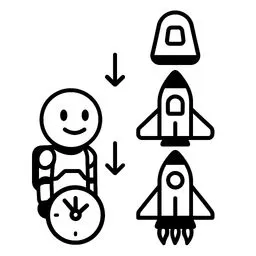
36) Timebox the Work, Bankroll the Plan
Section titled “36) Timebox the Work, Bankroll the Plan”Principle. Time is fixed. Scope flexes. Runway is sacred. Iteration delivers.
In practice
How to run it.
Time is sacred. Scope bends. Cut features (never quality) when needed.
Ship valuable slices, not half-baked promises. Each delivery must work on its own, not a useless fragment waiting for “someday”.
Ship on schedule, every time: each cycle adds value.
Buffer for chaos. The unexpected always happens.
Track runway and burn rate religiously. Every founder needs to know: “How long until we’re dead?” and adapt the plan accordingly. Money cannot bend like scope can.
Definition of done. Every iteration ships something usable. Cadence is respected, perfection is not.
Anti-patterns. Story-point theater. Perfection delays. Extending deadlines instead of cutting scope. Overtime heroics. Big-bang releases.
Example: Our complex “Environments” feature was delivered incrementally by just two engineers over a year. We aggressively sliced the scope, delivered value in stages, and maintained capacity for other priorities. This approach preserved our budget buffer while maximizing product value.
37) Measure Outcomes You Can’t Game
Section titled “37) Measure Outcomes You Can’t Game”Principle. If it can be gamed, it will be. Vanity metrics rot judgment. Only outcomes that map to real customer value matter. Everything else is noise.

In practice
How to run it.
Define meaningful objectives first, then choose metrics that track real progress toward them. Never the other way around.
Use revenue as proof of solved problems.
Kill every KPI that doesn’t drive action or impact customer value. No vanity metrics.
Treat OKRs as a compass, not the destination. They set direction, not the goal.
Track adoption, retention, time-to-value, and organic expansion.
Definition of done. Teams win when customers use, stay, expand, and sleep better. Internal scorekeeping is irrelevant.
Anti-patterns. Story-point fetish. Dashboard theater. Metrics that punish instead of inspire.
Example: Our release frequency and stability have dramatically improved since our early years. By focusing on outcomes (small releases, zero deployment incidents, polished user experience, efficient developer workflows, user feedback) rather than outputs (number of tickets, PRs, or story points), we’ve built a product that delivers more value with less bloat.
38) Ship Trust: Security from Day Zero
Section titled “38) Ship Trust: Security from Day Zero”Principle. Trust isn’t a feature you add later; it’s foundational. Even as a startup, security and trust should be baked in from day one, not an afterthought.

In practice
How to run it.
Maintain robust security now, not tomorrow. Fix issues promptly.
Security isn’t a checkbox, it’s survival. Security by design.
In enterprise, having internal security expertise gives you a competitive edge.
No security = no large enterprise deals. Don’t delude yourself thinking you’ll add it “later.”
Get SOC2 certification early. Yes, it hurts. Yes, it’s expensive. But without it, enterprise doors stay closed.
Definition of done. Features ship secure by default.
Example: In the early days of our SaaS platform, we opted for a fully siloed approach: every customer is deployed separately with no multitenancy. While this creates a hard constraint, our serverless architecture supports it effectively. For the enterprise market, this approach eliminates numerous data security discussions, analyses, and compliance headaches.
Customers & Growth
Section titled “Customers & Growth”How you captivate, nurture, and transform customer relationships into sustainable growth
In practice
How to run it.
24-hour rule: Every interaction gets logged: details, stakeholders, next steps, budget, competition. No delays.
Track down every verbal commitment, especially feature or timeline promises.
Keep data clean: weekly hygiene, required fields, and objective deal stages. Dirty CRMs kill deals.
Implement standardized deal stages with structured qualification process, objective exit criteria and automation to flag stale opportunities after days of inactivity.
Measure CRM health: missing data equals missing money.
Definition of done. The CRM mirrors reality. Anyone can pick up any account without a handoff. Forecasts match reality with low variance.
Anti-patterns. Private spreadsheets. “I’ll update later.” Memory-based reporting. Selective logging. Treating CRM as admin work. Inflated opportunity records.
Example: A sales executive promised a feature to a strategic customer but never logged it. Months later, the customer asked about the timeline. The product team had no idea. One missing note broke the chain of trust.
40) Events Are Growth Engines
Section titled “40) Events Are Growth Engines”Principle. Events are money on fire, not happy hours. Every conference, exhibition, and meetup is an investment that must deliver tangible returns.

In practice
How to run it.
Before: Set targets, prepare ruthlessly. Know exactly who you want and why.
During: Capture real contacts, not business cards. Have conversations that matter, document immediately.
After: 48h recap or it didn’t happen. Follow up in a week or don’t bother.
Prove it: track contacts and measurable learnings; events must pay for themselves in pipeline or knowledge.
Definition of done. Knowledge captured, contacts entered, cash justified.
Anti-patterns. Events as paid vacations. Solo trips that die in your brain. Lost business cards. “Great vibes” with no deals. Booth zombies. Dead-end follow-ups. Money wasted without return.
Example: At one of the exhibition, every teammate had assigned prospects ahead of the events. The recap delivered 27 qualified leads, 5 competitive insights, and 3 feature requests. Within six months, deals closed worth 2× the cost. The event wasn’t just fun, it was profitable.
In practice
How to run it.
Apply the value test: if it doesn’t serve a clear business goal, don’t post it.
Stay on your message: don’t chase competitors unless strategic, and only add value to influencer threads. No arguments, ever: thank supporters, fix errors, walk away from trolls.
Kill the corporate voice: be real, be clear, be brief. Nobody reads corporate babble.
Definition of done. Posts and interactions drive business outcomes, strengthen your brand, and position you strategically.
Anti-patterns. Posting without purpose. Knee-jerk competitor engagement. Oversharing confidential info. Defensive replies. Corporate noise.
Example: A quick comment on an influencer’s post earned us a feature in their follow-up. However, posting a client story without approval required immediate removal and an apology. The incident nearly cost us an important commercial discussion. As a startup, trust is our most fragile asset. Value wins, not noise.
42) Customer Obsession: Feel Their Pain, Fix it Fast
Section titled “42) Customer Obsession: Feel Their Pain, Fix it Fast”Principle. Use your own damn product. Every day. Feel the pain, fix it instantly. Talk to customers constantly. That’s how you earn their money.
In practice
How to run it.
Use the product daily in real scenarios, not just test labs. If you don’t use it, why should anyone else?
Talk to customers: every team member must connect directly with users through support, feedback sessions, or user calls.
React fast: customer-level urgency is the standard. If it hurts you, it must be fixed now.
New features ship only after you’ve used them yourself. If you won’t, don’t ship.
Definition of done. Most people use or test the product daily. They spot pain and fix it fast.
Anti-patterns. Building useless crap you wouldn’t touch. Ghost-mode customer avoidance. Ignoring bad user experiences.
Example: At our company, engineers, finance, marketing, IT, CTO, even the CEO, use our platform and know the customer pains. Regular customer calls keep us connected to their reality. This dual perspective drives us to fix and improve with genuine urgency.