saastr.com - The Best AI Startups Do the Training For You. It’s On You to Make the Agent Awesome — Not Your Customers.
Think about how customers bought enterprise software in 2019. Or even in 2023.
You’d get sold by a sales rep. Then you’d hire an Accenture or other third party to deploy it over 9-12 months. And you’d hope and pray it worked like the sales rep promised.
No One Will Tolerate that in AI
Section titled “No One Will Tolerate that in AI”Not in 2025. Not in 2026. And definitely not ever again.
Time to value now often has to happen before you even get a contract signed. I talked about this with Lenny on his podcast last week — and it’s one of the biggest shifts I’m seeing across my portfolio and in the AI companies growing fastest right now.
The Day 1 Problem
Section titled “The Day 1 Problem”Traditional SaaS had a predictable adoption curve:
- Month 1-3: Onboarding and basic setup
- Month 4-6: Team adoption and workflow integration
- Month 7-12: Advanced features and expansion
- Year 2+: Optimization and scale
You could succeed with a lean CS team because customers scaled up gradually.
AI applications with agent training requirements flip this entirely on its head.
The customer needs a well-trained agent on Day 1. Not Day 90. Not after six months of “learning.” Day 1.
Why?
- The agent’s quality determines whether the customer sees value immediately
- Poorly trained agents create bad experiences that are hard to recover from
- Customers won’t tolerate a “learning period” when they’re replacing human workflows
- First impressions with AI are everything — one bad interaction and trust is broken
The Best AI Vendors Have Figured This Out
Section titled “The Best AI Vendors Have Figured This Out”Here’s what I told Lenny: Pick the vendors who offer to help you the most.
The winning AI companies in 2026 aren’t the ones with the flashiest demos or the biggest Series B. They’re the ones who do the training for you.
At SaaStr, we’re running 20+ AI agents right now. The ones that work? Their vendors did 80% of the heavy lifting in the first 30-60 days:
- Daily check-ins during onboarding
- Custom training on our specific data and workflows
- Proactive identification of edge cases before we found them
- Real-time iteration when something wasn’t working
The ones that flopped? “Here’s your login. Good luck. Call us if you have questions.”
Here’s what most people don’t know: We’re the #1 performing customer for both Artisan and Qualified across their entire customer bases.
That’s not because the tools are magic. It’s because their teams invested heavily in our training and daily optimization alongside us. Most customers achieve 60-70% of potential performance. Top performers get 90-95%. The difference is the vendor partnership.
Forward Deployed Engineers Are the New CS
Section titled “Forward Deployed Engineers Are the New CS”Every major AI company has figured this out. Palantir essentially invented the model. Now everyone’s copying it.
What Forward Deployed Engineers actually do:
- Work directly with customers to understand their specific processes
- Build end-to-end workflows and take them to production
- Handle model training and iteration until it works
- Solve real-world implementation problems daily
They’re engineers + consultants + AI trainers rolled into one.
If your ACV is $50K+, you can hire FDEs to do the training and handle edge cases.
If your ACV is $5K? Who’s doing 30 days of training for each SMB customer?
This is where most AI companies are stuck.
The companies that figure out how to systematize the FDE training process will win the SMB market. They’ll capture the expert knowledge once, then deploy it at scale.
That’s exactly what we did with SaaStr AI. I did manual training for 60+ days. Now that knowledge works for hundreds of thousands of users.
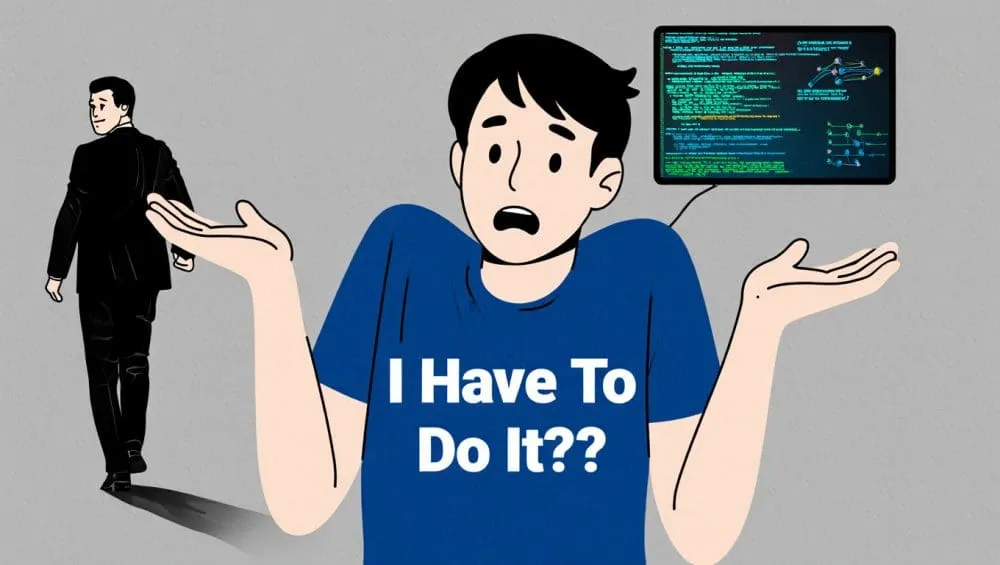
It’s On You to Make the Agent Awesome
Section titled “It’s On You to Make the Agent Awesome”Here’s the uncomfortable truth: even with a great vendor, your AI agent will fail if you don’t put in the work.
But here’s the flip side for founders building AI products: It’s on you to make the agent awesome. Not on your customers to figure out how to get your agents to work.
If you’re building an AI product and expecting customers to:
- Train your agent themselves
- Figure out the edge cases themselves
- QA the outputs themselves
- Iterate on prompts themselves
You’re going to have a bad time. And so will your customers.
The best AI startups in my portfolio take a different approach:
They treat customer success like product development.
Every customer deployment is a chance to make the underlying model better. Every edge case they solve gets baked into the product. Every training document they create gets systematized for the next customer.
Your customer’s job is to use the agent. Your job is to make sure it works.
What the Best AI Companies Have Learned
Section titled “What the Best AI Companies Have Learned”Gorgias: “The First Error is Often the Last Chance”
Section titled “Gorgias: “The First Error is Often the Last Chance””Romain Lapeyre’s team at Gorgias (1000+ brands using AI support agents) discovered something brutal: customers who experience a single significant error with AI automation rarely give it a second chance.
That’s why their “30 in 30” program exists — get brands to 30% automation within 30 days. They don’t leave customers to figure it out. They have a structured playbook:
- Start with basic help center content automation
- Add progressively more complex capabilities
- Use AI to evaluate AI (their “Auto QA” system)
- Channel-specific optimization (email vs. chat need different approaches)
The result? Top performers achieve 80%+ deflection rates. But only because Gorgias does the training work, not the customer.
Decagon: “Agent Product Managers” Are the Secret
Section titled “Decagon: “Agent Product Managers” Are the Secret”Jesse Zhang’s Decagon team has a sizable team of human “Agent Product Managers” who work with customers to stand up AI support agents. Not CSMs. Not implementation specialists. Dedicated people whose job is making the agent awesome before the customer uses it.
The economics tell the story: zero to eight figures in ARR in 18 months. They’re not just selling software — they’re selling working agents.
Flatfile: “95% of AI Pilots Fail”
Section titled “Flatfile: “95% of AI Pilots Fail””Niko Lazaris, VP of AI Engineering at Flatfile, dropped this stat at SaaStr AI Day: 95% of AI pilots fail. Not because the technology doesn’t work. Because nobody does the training.
His 3-step playbook for the 5% who succeed? It all starts with upfront investment in making the agent work — not hoping the customer figures it out.
What This Looks Like in Practice
Section titled “What This Looks Like in Practice”I talked to a founder running an AI coding assistant company. Here’s their resource allocation:
Traditional SaaS approach:
- 1 CSM per 20-30 accounts
- Minimal technical resources
- Self-service onboarding
- Expansion through upsells over 12-18 months
Their AI-native approach:
- 1 Forward Deployed Engineer per 5-10 enterprise accounts in first 90 days
- Deep integration work before go-live
- Custom agent training on customer’s codebase and practices
- Target: Customer seeing production value in Week 1, not Month 3
One of their customers told them: “We expected a 6-month ramp like every other enterprise software we’ve bought. You had us getting value in Week 2. That’s why we expanded from 50 seats to 500 seats in Quarter 2.”
That’s the difference.
The Training Compound Effect
Section titled “The Training Compound Effect”What most founders don’t realize: the upfront investment in training actually reduces long-term costs.
Traditional SaaS often had:
- Lower upfront implementation costs
- 12-18 month adoption curves
- Higher churn because value took too long to materialize
- Expansion that required years, not quarters
- Multiple CSM touches over years to drive adoption
AI-native with heavy Day 1 investment:
- Higher upfront implementation costs (2-3x more FDE time)
- Immediate value realization
- Lower churn because the agent works from Day 1
- Expansion in quarters, not years
- Less ongoing CS intensity because the product is already delivering
One VP of Customer Success told me: “We spend 3x as much in the first 90 days as a traditional SaaS company would. But our churn is half, our expansion rate is double, and our customers require 40% less ongoing support after month 3. The math works.”
The math absolutely works.
A Warning Story: What Happens When Vendors Don’t Train
Section titled “A Warning Story: What Happens When Vendors Don’t Train”Brex kept sending alarming emails demanding customers “immediately deposit $5 million” to maintain credit limits. When frustrated customers tried their AI support (powered by Decagon), it wouldn’t even let them chat — it just closed the window.
That’s an AI support agent that nobody trained properly. The fix? Zero complex training required. Just one human sampling issues and uploading content explaining: “That email sounds alarming, but you don’t need to deposit $5 million. Here’s how Brex credit actually works.”
Thousands of people got that email. A well-trained agent handles those queries perfectly. An untrained agent creates a customer service nightmare.
The difference isn’t the technology. It’s who does the work.
For AI Founders: Your To-Do List
Section titled “For AI Founders: Your To-Do List”1. Build FDE capacity into your model from Day 1
Not as an afterthought. As a core competency. Your first 10 hires should probably include someone whose entire job is making customers successful.
2. Systematize what you learn
Every customer deployment should make the next one easier. Build playbooks. Create templates. Turn tribal knowledge into product features.
3. Own the training
Don’t ask customers “what data do you want to train on?” Do the work to figure it out. Come to them with a recommendation.
4. Set aggressive time-to-value targets
If you’re not getting customers to meaningful value in Week 1-2, you’re taking too long. The old “Month 3” targets don’t work for AI.
5. Measure training ROI
Track how much FDE time each customer requires. Correlate it with expansion, retention, and NPS. Use that data to optimize your approach.
Training AI Agents Is Your Job. Not Your Customer’s. Even If It’s Also Their Job
Section titled “Training AI Agents Is Your Job. Not Your Customer’s. Even If It’s Also Their Job”The old model: Sell the software. Let the customer figure it out. Hope they renew.
The new model: Do the work to make the AI great. Make it awesome before you hand over the keys. Then watch expansion take care of itself.
Your AI agent will fail if no one properly trains it.
It’s on you — the AI vendor — to make it awesome.
Not on your customers to get the agents to work.