lukew.com - LukeW Small Teams Win, Again
I’ve always believed in the power of small teams. The start-ups I co-founded never exceeded five employees, yet achieved a lot. With today’s technology, even more companies can remain extremely small and be extremely effective. And that’s awesome.
When Twitter acquired Bagcheck in 2011, Sam (CTO) and I were shipping multiple times a day. We started with a command line interface that let us figure out what objects and actions we needed before ever building any UI. When we did, we used logic-less templates so I could iterate on the front-end quickly while Sam managed the back-end code.
The point was to move fast and learn. With just two people building the product, we never got bottlenecked on decision-making or coordination. While conventional wisdom says “add more resources” to go faster, it rarely works out that way. Most companies go slow because of plodding decision making and opaque alignment. Smaller teams naturally don’t have this problem.
But small teams can only do so much right? That’s why every team in a big company is always asking for more resources. Not anymore.
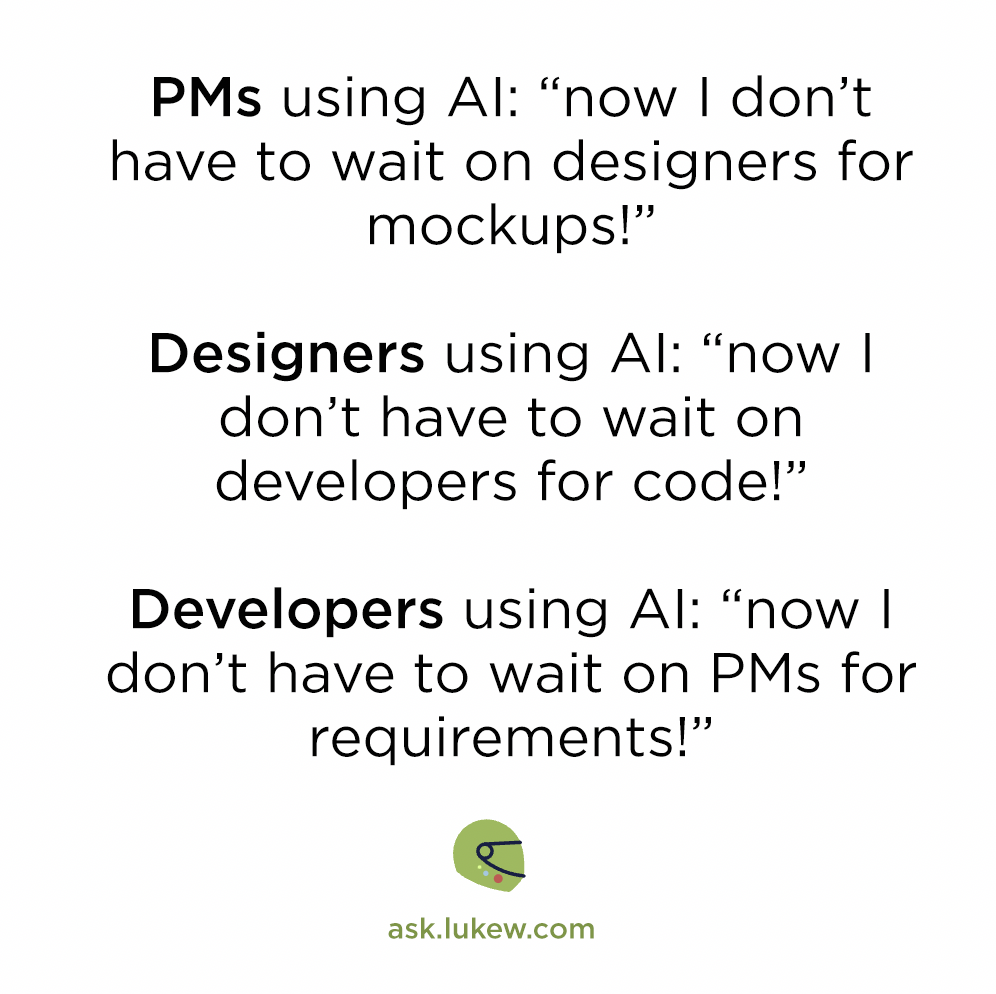
Armed with highly capable AI systems, everyone (designer, developer, etc.) on a team can get more done. In big teams, though, these new capabilities smack head first into the decision-making and alignment problems that have always been there. In small teams, they don’t.
So how small? Surely we need at least 100? 50? Bagcheck never crossed four employees and when Google acquired my next company, Polar, in 2014 there was five of us. These companies pre-dated AI coding agents and large language models. With today’s AI capabilities, the number of people you need to get a lot done fast is probably a lot smaller than you think.